
DOE for analytical method transfer: a practical CRO guide
Plan a method transfer DOE that separates site effects from method settings and gives sponsors an interpretable study handoff.
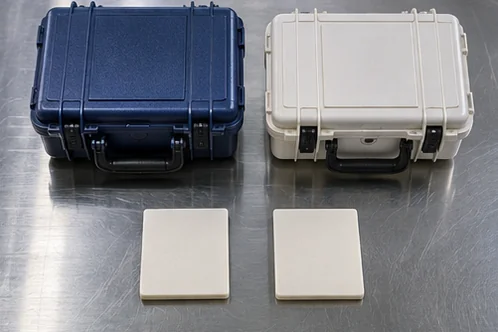
A method transfer study should tell a sponsor whether the receiving site can use a defined measurement workflow and still reach a comparable result. Confirm whether the sponsor wants to verify one locked configuration, understand which settings can move between sites, or diagnose a mismatch after transfer. Each decision calls for a different comparison. This example uses an inert optical calibration standard and synthetic numbers.
Agree on comparability in the study brief
State the sending site, receiving site, standard, intended measurement range, and primary comparison. Define the practical difference the sponsor can tolerate. Suppose the sponsor chooses an allowable difference of ±2 instrument units at the calibration point in this teaching example. That margin should come from the intended measurement decision and historical performance. It should be agreed before site data are reviewed.
Decide whether the criterion applies to a difference in means, additional variability, or both. A small average difference can conceal variable readings at the receiving site. Plan a precision criterion separately if repeatability or reproducibility will affect how the method is used.
Keep site and setting separately interpretable
If the question involves two instrument modes, include both modes at each site. A comparison of sending site using Mode 1 against receiving site using Mode 2 combines the site and mode effects. A crossed site-by-mode layout lets you check whether a mode behaves differently at the receiving site.
Pair measurements using shared reference lots or matched artifacts when the design supports pairing. Record reference ID, site, instrument, operator, run day, mode, and any repeat-read IDs. Operators who work at only one site are nested within their site. If each site also uses a different instrument, interpret a site difference as a difference between the tested setups. The conclusion applies to the two tested setups.
A reference check at each site gives the team a way to interpret a discrepancy. When the reference also shifts, inspect the reader or calibration state first. When reference checks agree and the study response diverges, review which preparation and analytical choices differ across sites.
| Mode | Receiving minus sending | Illustrative interval | Mean-shift decision |
|---|---|---|---|
| 1 | +0.6 | −0.4 to +1.6 | Within margin |
| 2 | +0.7 | −1.0 to +2.4 | Inconclusive |
Review the interval and precision together
Define the interval method and the decision rule before collection. In the example table, Mode 1 has an estimated receiving-minus-sending difference of +0.6 units. The illustrative uncertainty interval lies inside the ±2-unit band. Mode 2 has a modest point estimate, yet its interval extends past the upper bound. This illustrates why an apparently small sample average can still leave the transfer decision unresolved.
The table uses hypothetical summary values. For a formal equivalence test, use a prespecified analysis that matches your experimental units and pairing. A difference test with a large p-value may still leave shifts beyond the sponsor’s margin plausible.
Prepare the sponsor handoff
A handoff is ready when the receiving lab can reproduce the study decisions from the brief and the sponsor can see which evidence supports the proposed scope. An inconclusive outcome is easier to manage when the follow-up and its estimated effort were discussed up front.
- State whether the planned result applies to a named setup, both instrument modes, or a larger range supported by the design.
- Show the analysis unit, the source of each pairing or block, the estimates with uncertainty, and the separately evaluated precision checks.
- Keep deviations and repeat decisions in the report. A rerun should carry a documented trigger and should preserve the original record.
- Map unresolved outcomes to a next step, such as collecting more matched reference measurements, investigating site-specific settings, or restricting the scope of the transfer.